



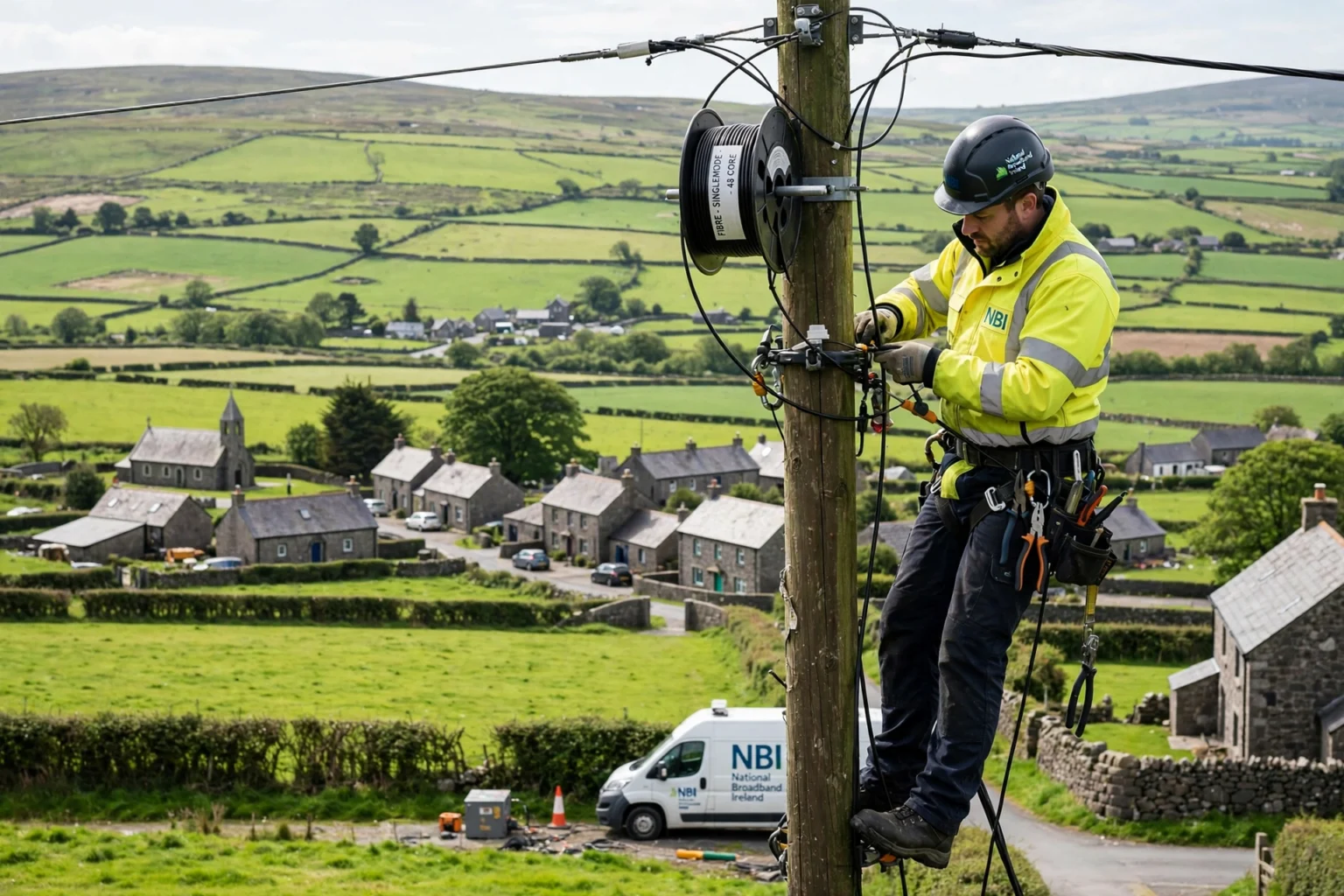

Ireland’s long-running effort to bring high-speed broadband to every home and business in the country has passed another major milestone, as the national rollout continues to connect rural communities that commercial operators long considered uneconomical to serve. For families and businesses far from the major cities, the arrival of fibre broadband is changing everything from remote work to farm management.
Why Rural Ireland Waited So Long
Ireland’s settlement pattern, with a high proportion of homes scattered along country roads rather than clustered in villages, made rural broadband unusually expensive to build. Through the 2010s, towns and cities gained fast fibre and cable services while many rural households relied on slow copper lines, patchy mobile signals or costly satellite links. The gap became a persistent political issue, raised by farmers who could not file online returns, students who could not study from home, and small firms losing business to better-connected competitors.
The National Broadband Plan, administered through National Broadband Ireland, was the state’s answer: a subsidised programme to build a fibre network passing more than half a million premises in the areas the market had left behind.
What the Milestone Means on the Ground
Each new phase of the build brings thousands more premises within reach of gigabit-capable connections. In practical terms, that means a farm household can run video calls, stream school lessons, upload accounts to the cloud and operate smart farm equipment at the same time, on a connection that would once have struggled with a single video stream. Local engineers have been laying fibre along roads and across fields county by county, in one of the largest civil engineering projects in the state’s history.
Read also: Ind Slots vs Other Gaming Apps: Which One Is Better? · Beyond the Giants: Dublin’s Startups Are Building Their Own Tech Story
Community workers report that connections are being taken up quickly once available, with remote workers among the keenest customers. The ability to work from a rural home, even part of the week, is reshaping local economies: money once spent commuting stays in the area, and villages that feared decline are attracting younger families again.
Challenges Still on the Road Ahead
The programme has not been without difficulty. Costs rose, timelines slipped, and critics in the Dáil have repeatedly questioned whether the state is getting value for money. Wayleaves, weather and the sheer logistics of reaching the most isolated homes continue to test the schedule. Government information on the plan and related digital services is published through gov.ie, where households can check the status of their area.
There is also the question of what happens inside the home once fibre arrives: older devices, weak wifi routers and digital skills gaps can all limit the benefit, and community digital training programmes are working to close that gap.
Businesses Feel the Difference First
Ask local business owners what changed when fibre arrived and the answers come quickly. Hotels and guesthouses can finally offer the reliable wifi guests expect. Food producers take orders online, track deliveries and sell directly to customers abroad. Tourism operators take bookings in real time rather than over patchy phone lines. Even small garages and trades businesses now rely on online ordering, digital invoices and card payments that a slow connection once made frustrating. Enterprise agencies say enquiries from people hoping to relocate a small business, or start one from a rural base, have risen steadily in areas where the network has landed, suggesting the economic effects compound long after the construction crews leave.
A Different Rural Future
However the final accounting looks, the direction of travel is clear. Reliable high-speed internet is becoming as basic an expectation in rural Ireland as electricity and running water. When the network is complete, the old divide between the connected city and the left-behind countryside will be far harder to draw, and that may prove to be the rollout’s most lasting legacy.
