



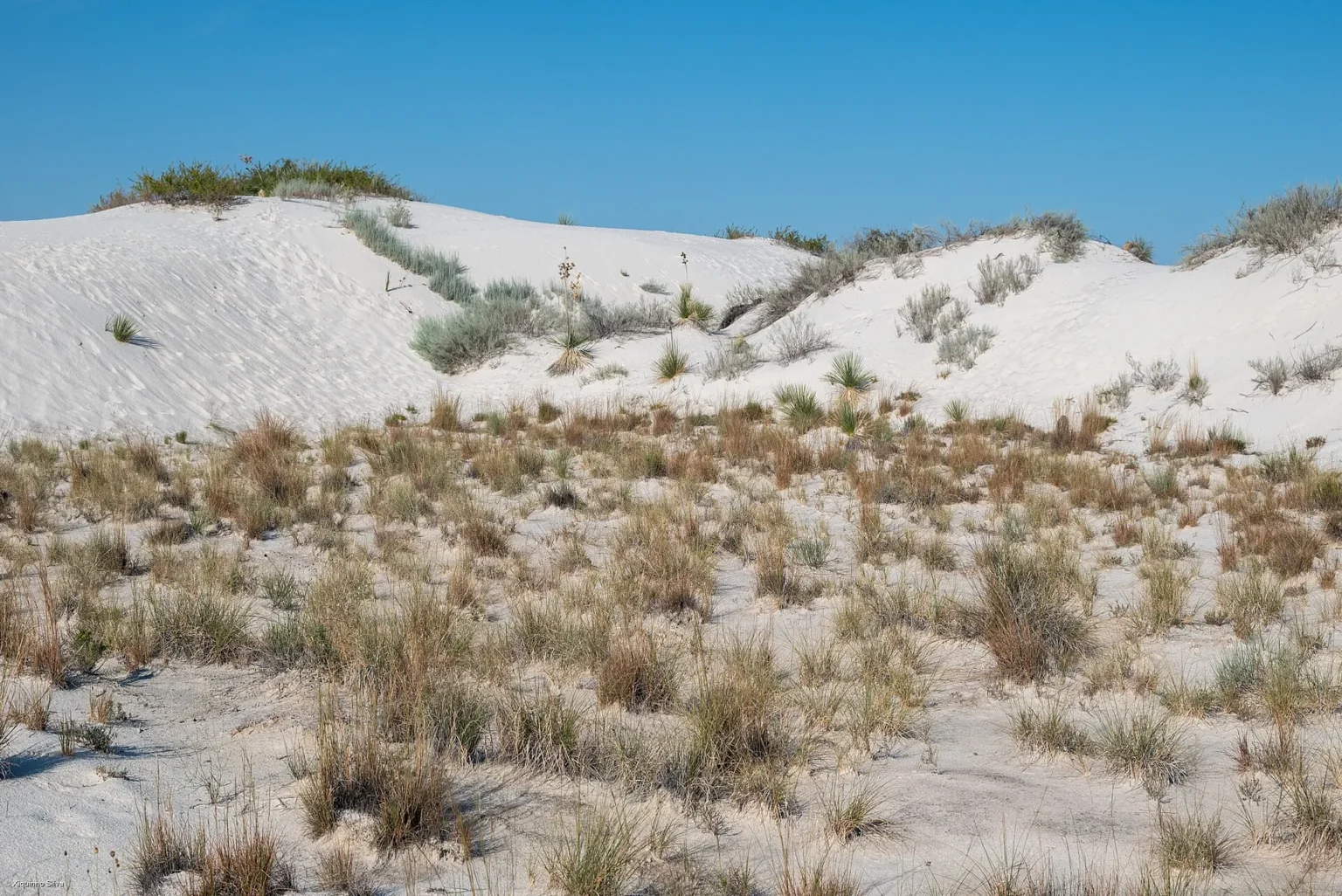

The earliest Americans were tougher, and lived in a tougher world, than previously understood. That is the conclusion of new research from White Sands in New Mexico, where scientists have reconstructed the climate faced by human inhabitants during the Last Glacial Maximum and found a pattern of abrupt environmental change.
The study, published in Science Advances (DOI 10.1126/sciadv.aeh0707), examines the Tularosa Basin, home to ancient Lake Otero and to the celebrated fossil footprints that provided some of the earliest evidence of human presence in North America, dated in earlier research to around 21,000 to 23,000 years ago.
A Shoreline in Flux
Working from the basin’s sediment record, the team found that the lake beside the footprint sites changed repeatedly as the glacial climate fluctuated. Water levels and shorelines shifted, and the vegetation communities around the lake changed with them. The people who used the basin would have experienced these changes directly, in the practical currency of water, game and forage.
Abrupt is the operative word. Environmental change arriving within a generation or two cannot be handled by slowly evolving habit; it requires active adaptation, new knowledge and, very likely, cooperation between groups sharing information about a changing landscape.
International Significance
White Sands has become one of the most consequential archaeological sites in the world because it reset the timeline for the peopling of the Americas. The new research, available at Science Advances, moves the discussion forward from chronology to lived experience, describing what settlement at that early date actually demanded of the settlers.
Our world desk applies the same scrutiny to fast-moving figures elsewhere, as in our explainer on how US Measles Cases Rise 8% in a Week to 4,410: What Is Driving It.
What Comes Next
Corroboration From Across the Region
White Sands does not stand alone. Across the American Southwest, Ice Age sites and climate records tell a consistent story of lakes that have since vanished, wetlands that supported both animals and people, and a regional climate considerably wetter, and more variable, than today’s desert. The new study plugs White Sands firmly into that regional framework.
For Irish readers accustomed to Atlantic weather changing by the hour, there is something recognisable in the portrait: communities organised around the expectation of change rather than the hope of stability. The scale differs, twenty millennia of it, but the human response the study documents is a familiar one.
The research team is expected to extend the record further, with work under way on related deposits that may show how the basin’s people fared as the Ice Age ended and the lake finally vanished. That later chapter matters because it tests the same adaptation story under the opposite pressure: not cold and fluctuating water, but warming and drying, the long transition that eventually produced the desert landscape visitors see at White Sands today.
Conservation adds urgency to the research. The same winds that built the dunes are slowly erasing the trackways, and heritage managers must balance public access against preservation of a record that cannot be replaced. Documenting the site’s climate and human history now, while the evidence survives, is therefore both a scientific project and an act of rescue on behalf of future researchers and of the wider public record alike.
Researchers expect White Sands to keep yielding evidence as dating and environmental techniques improve. For now, the picture is vivid enough: at the coldest point of the last ice age, in a basin of shifting lakes at the edge of a young dune sea, people lived, walked and raised children through conditions that changed abruptly around them. They were, by any measure, remarkably resilient.
