


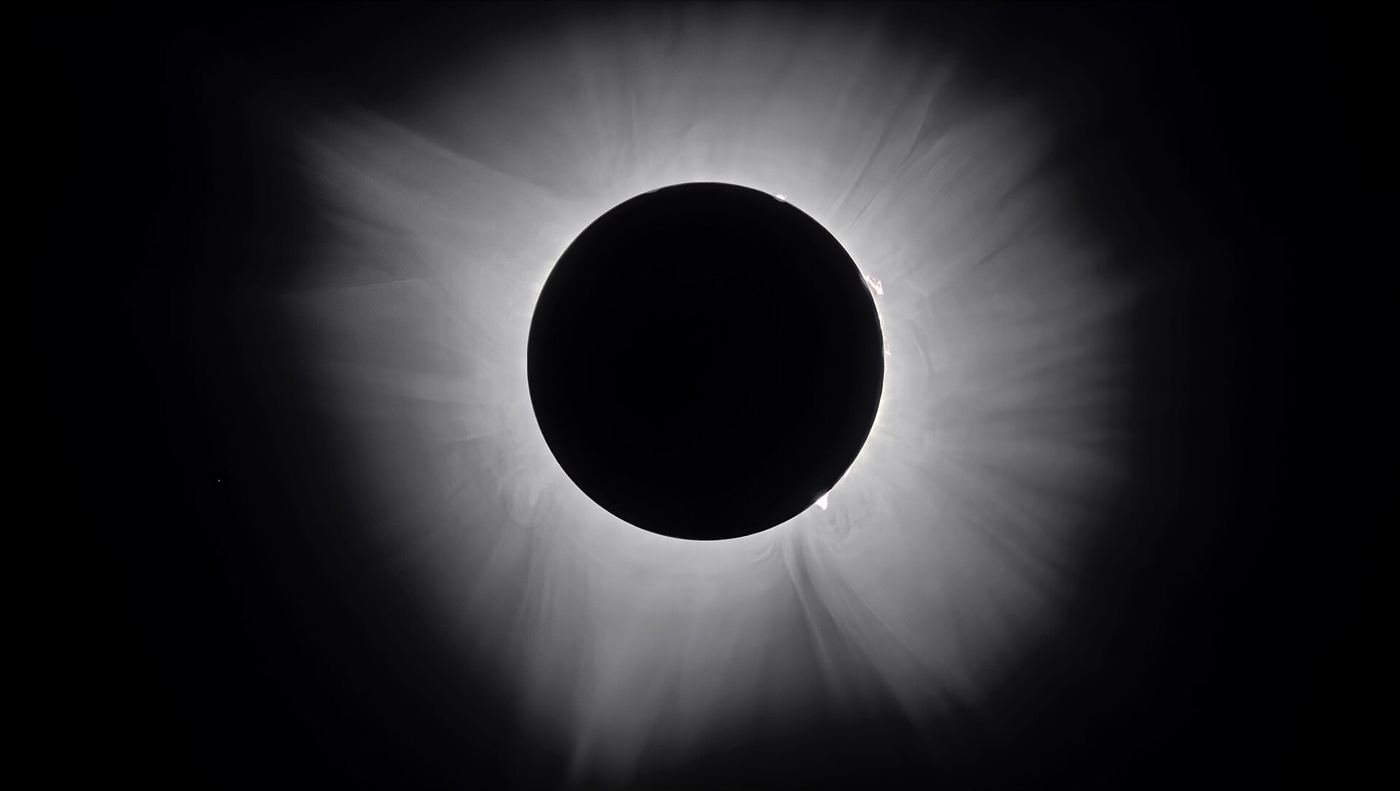

On Christmas Eve 2024, a spacecraft the size of a small car flew closer to the Sun than any human-made object in history. NASA’s Parker Solar Probe passed just 6.1 million kilometres from the Sun’s visible surface, about four percent of the distance between the Earth and the Sun, while travelling at roughly 692,000 kilometres per hour, making it the fastest object humans have ever built. The probe was out of radio contact at the time, flying on its own through plasma heated to more than a million degrees, protected by a carbon-composite heat shield about 11 centimetres thick. Launched in August 2018, Parker reached its record orbit after seven gravity assists from Venus, the last in November 2024, which tightened its path around the Sun. It first crossed into the Sun’s outer atmosphere, the corona, in April 2021.
What the Evidence Shows
Parker exists to answer a question that has puzzled scientists for decades: why is the corona, the Sun’s outer atmosphere, far hotter than the surface below it? The probe’s instruments sample the solar wind at its source, measuring magnetic fields, plasma and energetic particles as they stream outward, and the data are already reshaping ideas about how the wind is heated and accelerated. The findings matter on Earth too, because solar storms can disrupt satellites, power grids and radio communications, and better forecasts depend on understanding what happens close to the Sun. Each orbit takes about 88 days, and every pass returns the probe to the same record distance from the Sun. Parker has now made dozens of close passes and its mission has been extended into 2029, so the fastest spacecraft ever built still has years of diving left. Reporting and analysis from sources such as National Science Foundation track the same developments, and specialists following Parker Solar Probe record flyby say the direction is now consistent across independent lines of evidence.
The Wider Context
The wider context is a research landscape in which replication and open data now decide reputations. Findings connected to Parker Solar Probe record flyby are being checked by independent groups with shared datasets, and the teams involved publish their methods in full so rivals can test every step. That discipline is slower than a headline cycle, but it is why results in this area increasingly survive first contact with scrutiny.
What Happens Next
What happens next in the story of Parker Solar Probe record flyby will be decided by follow-up work already under way: larger samples, longer observation and instruments that have not yet come online. The researchers involved are unusually united on one point, that the current results justify the next investment of time and money. Readers will not have to wait long for the first tests of that claim. You can follow related developments in our coverage of science.
There is a practical lesson in all of this for readers deciding what to do today. Start with the verified facts, be wary of anyone promising certainty, and prefer reversible steps while the evidence is still developing. Circumstances differ by country, income and personal situation, so general guidance should always be weighed against your own context before you act on it in any significant or lasting way.
