



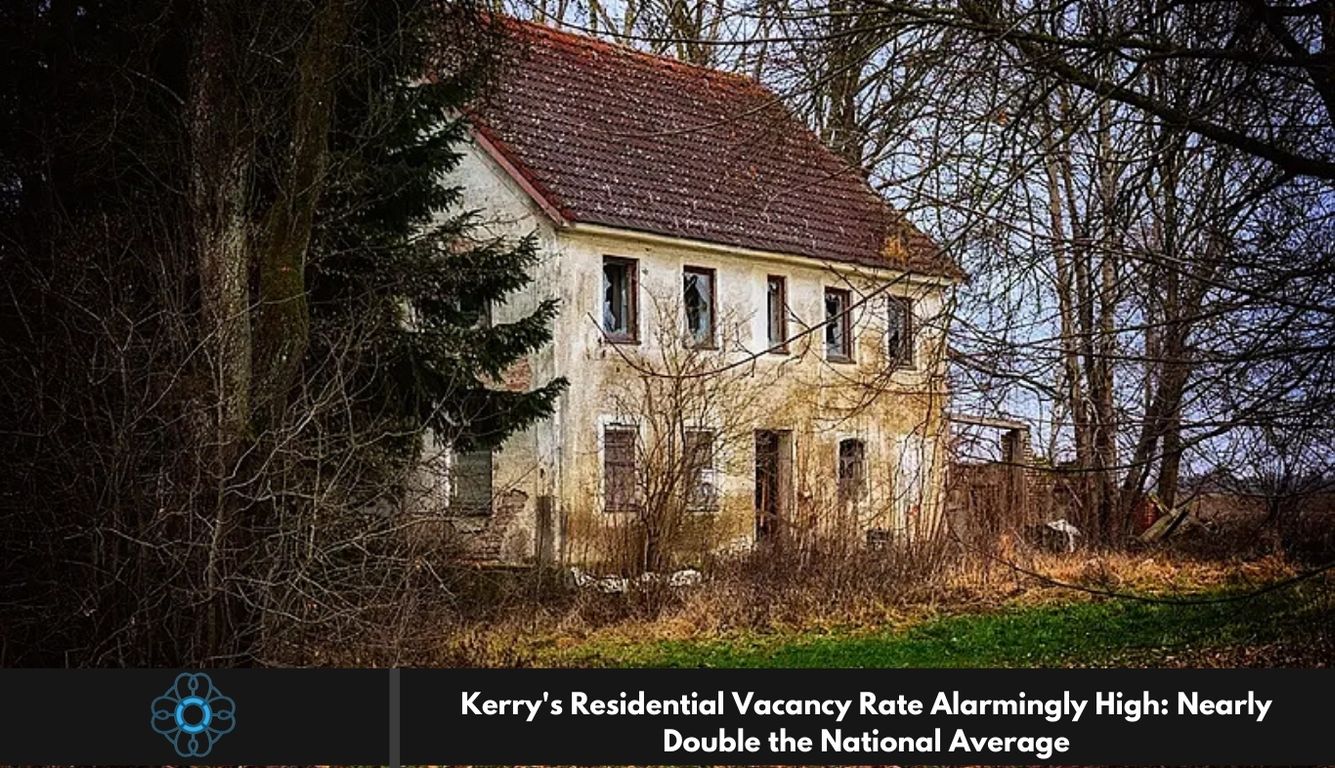

Kerry’s housing market has ,been highlighted, with its residential vacancy rate reaching 7.3%, almost double the national average of 3.9%. This striking disparity, highlighted in the GeoDirectory Residential Buildings Report for Q2 2024, underscores unique challenges in the county’s property landscape, from the unused housing stock to regional economic dynamics.
Lower property prices in Kerry, averaging €265,091—36% below the national figure—add another layer of complexity. While affordability makes the region attractive to some buyers, the high vacancy rate and underutilized properties raise questions about alignment with market demands and development strategies.
With nearly 6% of Ireland’s derelict residential addresses located in Kerry and new builds accounting for a modest share of property transactions, addressing these trends is critical. This article delves into the factors driving these statistics and explores opportunities to revitalize the county’s housing market.
Understanding Kerry’s Residential Vacancy Rate
Vacancy Rates: Kerry vs. National Average
The residential vacancy rate in Kerry is strikingly high at 7.3%, which is 3.4 percentage points above the national average of 3.9%. This disparity highlights Kerry’s distinct housing dynamics, where supply appears to outstrip demand in certain areas. Factors such as rural depopulation, economic conditions, and the availability of employment opportunities may contribute to this significant variance.
Regional Insights
Urban vs. Rural Divide: Kerry’s rural areas are likely to have higher vacancy rates compared to urban centers such as Tralee and Killarney.
Seasonal Factors: As a popular tourist destination, Kerry may have a higher proportion of holiday homes, which could influence vacancy statistics.
Property Prices in Kerry: A Comparative Analysis
Average Property Prices
The average property price in Kerry stands at €265,091, a substantial 36% lower than the national average of €381,749. This affordability could be a double-edged sword. While lower prices make Kerry an attractive option for first-time buyers, it may also indicate a lack of premium properties that appeal to high-income buyers.
Impact on Investment
Lower property prices might attract investors looking for affordable real estate, but the high vacancy rate could deter potential buyers concerned about rental yields or long-term value appreciation.
New Developments and Construction Trends
Growth in Residential Address Points
The GeoDirectory report reveals a 59.5% year-on-year increase in residential address points in Kerry, with 673 new additions in the year to June 2024. This indicates significant construction activity and a growing housing stock.
Residential Buildings Under Construction
At the end of the second quarter of 2024, 495 residential buildings were under construction in Kerry. This figure demonstrates active efforts to address housing demands and modernize the county’s housing infrastructure.
Challenges in Development
Despite the construction boom, high vacancy rates suggest that either the new developments are not aligning with market needs or existing housing remains underutilized.
Property Transactions and Market Activity
Property Transactions in Kerry
In the year leading up to June 2024, 1,100 property transactions were recorded in Kerry. Interestingly, new builds accounted for only 5.5% of these transactions, indicating a preference for existing properties among buyers.
Market Trends
The relatively low percentage of new builds in total transactions raises questions about the demand for newly constructed homes and the suitability of recent developments in meeting buyer expectations.
Derelict Properties: A Missed Opportunity?
Derelict Residential Address Points
Kerry accounts for 5.7% of the State’s total derelict residential address points. This statistic highlights the untapped potential of these properties, which could be revitalized to address housing shortages and attract new residents.
Revitalization Efforts
Local authorities and developers could focus on renovating derelict properties, transforming them into affordable housing or community-focused spaces.
Factors Influencing Kerry’s Housing Market
Tourism and Seasonal Housing
Kerry’s reputation as a tourist hotspot means that a significant portion of its housing stock may be allocated for short-term rentals or holiday homes. While this bolsters the local economy, it also contributes to higher vacancy rates during off-peak seasons.
Economic and Employment Trends
Economic opportunities in Kerry, particularly in rural areas, influence housing demand. Enhanced job creation and infrastructure development could help retain residents and attract new ones.
Infrastructure and Accessibility
Improved transport links and amenities could make Kerry a more attractive option for remote workers or those seeking a better quality of life outside urban hubs.
Strategies to Address High Vacancy Rates in Kerry
Encouraging Urban Revitalization
Targeted Incentives: Tax breaks or grants for renovating vacant properties could encourage property owners to bring them back into use.
Mixed-Use Developments: Integrating residential, commercial, and community spaces could breathe new life into underutilized areas.
Promoting Affordable Housing
First-Time Buyer Schemes: Government initiatives tailored to Kerry’s market could help young families and professionals secure homes.
Community Housing Projects: Collaboration between local authorities and housing organizations could provide affordable rental options.
Attracting Remote Workers
With the rise of remote work, Kerry could position itself as a destination for professionals seeking scenic surroundings and a lower cost of living. Improved internet infrastructure and co-working spaces would support this demographic.
Frequently Asked Questions
Why is Kerry’s residential vacancy rate so high compared to the national average?
Kerry’s vacancy rate is influenced by several factors, including rural depopulation, seasonal housing used for tourism, and economic conditions. Many properties may also remain unused due to their location in less accessible areas or because they are derelict and require renovation.
How do property prices in Kerry compare to the national average?
The average property price in Kerry is €265,091, which is 36% lower than the national average of €381,749. This affordability reflects both the region’s appeal to budget-conscious buyers and the challenges of attracting investment in premium properties.
What steps are being taken to address Kerry’s housing challenges?
Efforts include increased construction activity, with 495 residential buildings under construction by mid-2024, and initiatives to renovate derelict properties. There is also growing interest in aligning new developments with the needs of local buyers and addressing infrastructure gaps to attract residents.
What role does tourism play in Kerry’s housing market?
Tourism contributes to a significant number of properties being used as short-term rentals or holiday homes. While this supports the local economy, it can also leave homes vacant during off-peak seasons, impacting overall vacancy rates.
Are there opportunities for property investment in Kerry?
Yes, Kerry’s lower property prices and the potential for revitalizing derelict or underutilized homes make it an attractive option for investors. However, understanding the local market dynamics is essential for ensuring sustainable returns.
What is the potential for remote workers to settle in Kerry?
Kerry’s scenic beauty, affordable housing, and improving infrastructure make it an appealing destination for remote workers. Expanding high-speed internet and co-working spaces could enhance its attractiveness to this demographic.
How does Kerry’s vacancy rate impact its local economy?
High vacancy rates can lead to reduced economic activity in affected areas, as unoccupied homes contribute less to local services and infrastructure. Addressing vacancy could boost community vitality and economic development through increased residency and spending.
What percentage of property transactions in Kerry involve new builds?
In the year leading up to June 2024, new builds accounted for only 5.5% of Kerry’s 1,100 property transactions. This suggests that most buyers prefer existing properties, potentially due to their location, price, or availability.
How significant is Kerry’s share of derelict residential properties in Ireland?
Kerry accounts for 5.7% of Ireland’s total derelict residential properties. This represents a substantial opportunity to rehabilitate these homes and address housing needs, provided there are adequate incentives and resources for redevelopment.
What can be done to reduce Kerry’s residential vacancy rate?
To reduce the vacancy rate, strategies could include renovating derelict properties, offering incentives for buyers and renters, and promoting urban renewal projects. Encouraging economic growth and improving infrastructure in rural areas could also make the region more attractive for permanent residency.
Conclusion
Kerry’s residential vacancy rate, while significantly higher than the national average, presents both challenges and opportunities. Addressing this issue requires a multifaceted approach that includes revitalizing derelict properties, encouraging affordable housing, and leveraging Kerry’s unique appeal to attract new residents.
Through collaborative efforts among government, developers, and the local community, Kerry can transform its housing landscape, ensuring that its rich heritage and natural beauty continue to attract and retain residents for generations to come.
