



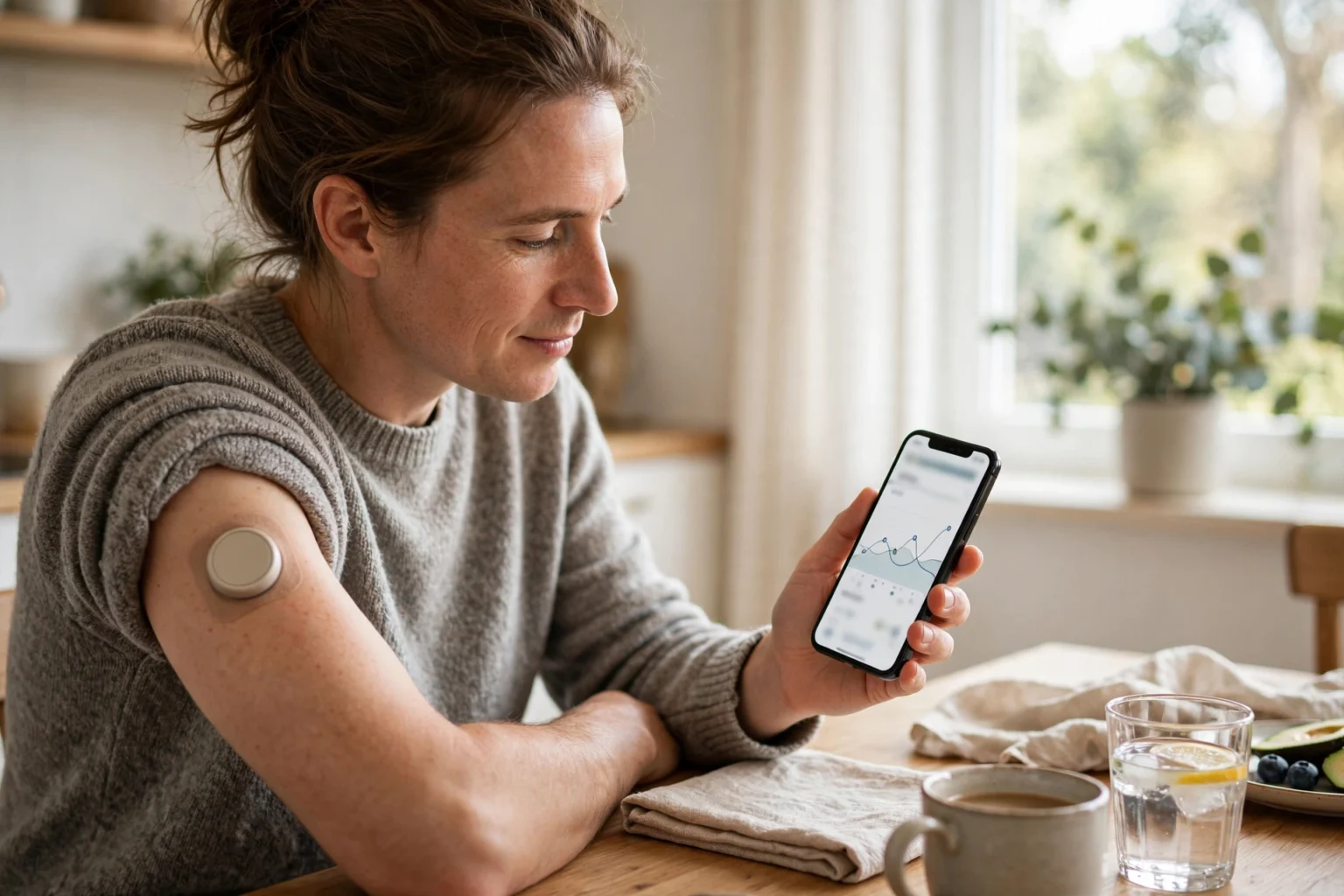

Adults with type 2 diabetes who do not use insulin could gain around five extra hours a day in their healthy blood sugar range by using a continuous glucose monitor, according to the largest clinical trial of its kind, published in the New England Journal of Medicine. The finding matters because most people with type 2 diabetes do not use insulin, and until now they have rarely been offered the wearable sensors that have become routine in type 1 diabetes care.
Continuous glucose monitors, often called CGMs, are small sensors worn on the arm or abdomen. They measure glucose in the fluid under the skin every few minutes and send the readings to a phone or receiver. Instead of a handful of finger-prick tests, users and their clinicians can see patterns through the day and night: the rise after breakfast, the dip after a walk, and the slow creep upwards during illness or stress.
What the trial found
Researchers reporting the results, summarised by the University of Colorado Anschutz Medical Campus, found that participants using a monitor spent approximately five more hours a day in their target blood sugar range than those receiving usual care. Time in range is increasingly treated as one of the clearest measures of diabetes control, because it captures both dangerous highs and lows rather than a single average.
That distinction is important. A three-month average blood test, known as HbA1c, remains a cornerstone of diabetes care, but two people with the same average can have very different daily lives. One may be stable, while the other swings between highs and lows. Spending more hours in range is linked with a lower risk of the long-term complications that make diabetes so serious, including damage to the eyes, kidneys, nerves and heart.
Why it matters in Ireland
Type 2 diabetes is one of Ireland’s most common long-term conditions, and its numbers rise with age, weight and family history. Many people manage it for years with diet, activity and tablets alone, attending their GP or practice nurse a few times a year. For them, a sensor that quietly reveals what food, sleep and exercise actually do to their glucose could turn general advice into personal evidence.
Clinicians say that feedback loop is often where the real benefit lies. Seeing a post-meal spike flatten after a short walk, or noticing that a favourite breakfast pushes glucose up for hours, gives people a reason to change that an annual test result rarely provides. Technology alone does not manage diabetes, but timely information can make everyday decisions easier, in much the same way that digital tools are reshaping other parts of Irish life, from Dublin’s growing tech scene to local health services.
Not a gadget, and not for everyone
Specialists are careful to add caveats. Sensors cost money, need replacing every one to two weeks, and generate a stream of data that can overwhelm some patients and already busy clinics. Alarms and constant readings cause anxiety for a minority of users. There are also practical questions about who interprets the data, how it fits into GP appointments, and whether supply would be prioritised for those most likely to benefit.
Cost-effectiveness will therefore decide what happens next. Health services, including Ireland’s, will want to know whether better daily control translates into fewer complications, fewer hospital visits and better quality of life over years, not just improved readings over months. The trial’s scale strengthens that conversation, but funding decisions will still need local evidence and clear eligibility rules.
A shift in how diabetes is managed
The broader direction of travel is clear, however. Diabetes care is moving from occasional snapshots to continuous information, and from one-size-fits-all targets to patterns that reflect a person’s actual routine. Professional guidance, including resources from the New England Journal of Medicine, increasingly reflects that shift as the evidence base grows.
For readers living with type 2 diabetes, the practical message is simple: do not buy a sensor on impulse and do not change medication based on a single reading. Ask your GP or diabetes team whether monitoring would help in your case, especially if your control is slipping despite tablets, or if lows are a concern. Five extra hours a day in a healthy range is a meaningful gain — and for many people, it may start with one informed conversation.
